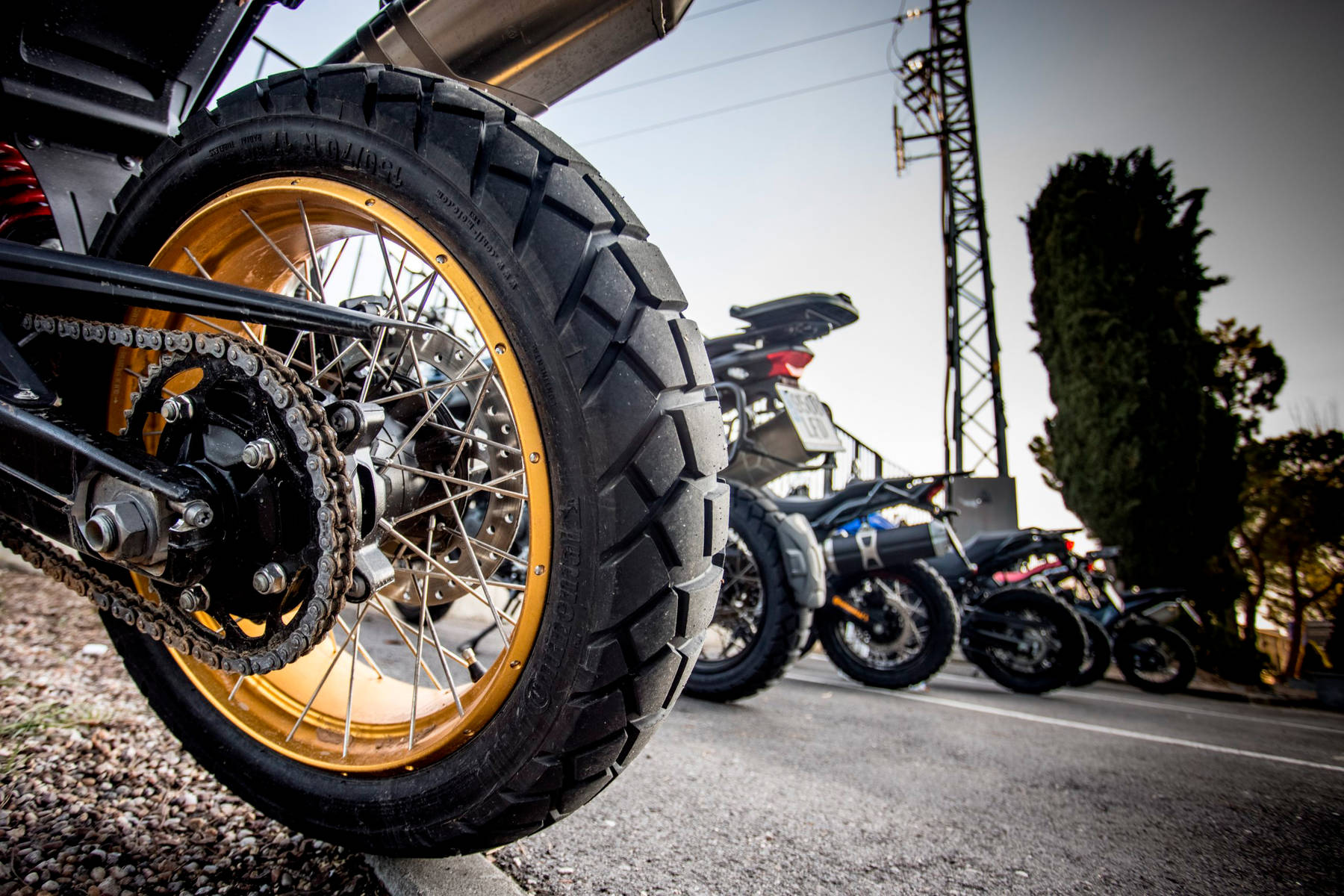
Signs, Factors, and Situations that Show it’s Time to Replace Them—Beyond Mileage or Tread Depth
Tires are the only point of contact between your motorcycle and the road. Their condition directly affects grip, cornering stability, and braking performance—but also your overall confidence when riding. With just two wheels and a limited contact patch, even small changes in behavior are noticeable.
That’s why it’s important to pay attention not only to maintenance, but also to when it’s time to replace them. Wear is the most obvious reason, but it’s not the only one. There are other factors—some visible, others less so—that determine when a tire is no longer delivering the performance you need. Let’s take a closer look at all of them.
Related

Wear: The Most Common Reason
 Tread wear is the main reason for replacing a tire. As miles add up, tread depth decreases, reducing the tire’s ability to evacuate water and maintain grip in different conditions. But beyond what you can see, the compound itself also loses performance over time.
This deterioration isn’t always linear or easy to detect. A tire may still have visible tread and yet have lost some of its properties. That’s why running it down to the limit isn’t a good idea: grip decreases, the risk of slipping increases, and so does the chance of a puncture.
To help identify that limit, tires include wear indicators (TWI)—small markers located within the tread grooves. When the tread reaches the same level as these indicators, it’s time for replacement. Even so, it’s best not to push it that far and to maintain a safety margin.
Wear doesn’t depend on mileage alone. Riding style, speed, load, tire pressure, and road conditions all have a direct impact on tire lifespan. Aggressive riding, incorrect pressure, or frequent use on abrasive surfaces can significantly accelerate wear.
Wear isn’t Always Even
 Not all tires wear evenly. It’s common to see differences between the center of the tread and the shoulders, but you may also notice unusual patterns like cupping, deformation, or stepped wear.
This kind of irregular wear is often linked to other factors, such as incorrect tire pressure, suspension issues, poor wheel balancing, or the way the bike is used. In these cases, it’s not just about replacing the tire—it’s also important to identify and address the root cause.
Catching it early is key. Irregular wear doesn’t just reduce grip; it can also affect stability and overall handling.
Tire Age Matters Too
 Even if a tire isn’t used often, it still ages. Over time, the rubber loses elasticity and becomes harder, which directly impacts grip.
After about five years, it’s a good idea to start paying closer attention to tire condition—even if wear doesn’t seem significant. While tires don’t have a strict “expiration date”, it’s generally recommended not to use them beyond ten years under any circumstances.
Certain factors can accelerate aging, such as prolonged exposure to sunlight, humidity, or long periods of inactivity. In these cases, a tire may look fine at first glance but no longer deliver the expected performance.
Related

Visible Damage and Issues
 A simple visual inspection can reveal more than you might expect. Cracks, cuts, deformation, or any unusual appearance on the surface are clear signs that something isn’t right.
These issues can result from a variety of causes, from demanding use to environmental conditions or incorrect tire pressure. In any case, if they appear, the safest option is to replace the tire without delay.
These signs shouldn’t be underestimated. Even if they don’t have an immediate impact, they do compromise safety and performance.
Punctures and Pressure Loss
 A puncture is one of the most obvious—and most critical—types of damage. In some cases, a temporary fix may allow you to continue riding, but only to reach a workshop.
Depending on the location and severity of the damage, a repair might be possible. However, it’s not always recommended, and in cases such as sidewall damage, replacement is mandatory.
It’s also important to watch for frequent pressure loss. If a tire needs to be inflated more often than usual, it could indicate internal damage that isn’t visible from the outside. In that case, it should be inspected and potentially replaced.
Using the Wrong Tire for your Needs
 Not all tires are designed for the same type of use. Choosing a tire that doesn’t match your riding style or terrain can affect both performance and durability.
An off-road tire like the TKC 80² won’t behave the same on pavement as a road-focused tire like the ContiRoadAttack 4. In the same way, a high-performance tire like the ContiSportAttack 5 isn’t the best choice for relaxed or mixed riding. In these situations, wear may be faster and handling less predictable.
That’s why it’s important to choose the right tire for your bike and how you use it. Not only does it improve the riding experience, it also helps maintain consistent performance throughout the tire’s lifespan.
Feel Matters: When the Bike Just doesn’t Feel Right
 Beyond what you can see, there’s another factor that shouldn’t be ignored: how the bike feels. As a tire loses performance, the motorcycle may start to behave differently. Less precision, reduced confidence in corners, or a general lack of grip are all signs worth paying attention to.
Sometimes, even without visible damage, it may be worth changing tires if they no longer suit your riding style or needs. It’s easy to choose the wrong tire at first—or for your riding habits to change over time. You might have chosen a TKC 70, but now spend more time on pavement, making a ContiTrailAttack 3 a better fit.
At the end of the day, feeling comfortable and confident on your bike is a key part of enjoying the ride.
Related