
How it actually affects grip and what’s worth keeping in mind
Tire warm-up is one of those topics that always comes up. It gets talked about a lot—mostly because of its connection to track riding—but out on the road, it’s not always clear what role temperature really plays in how a motorcycle behaves.
The reality is that yes, temperature does have a direct impact on how a tire performs. But it’s less about obsessing over “warming them up” and more about understanding what happens when they’re cold, when they reach their sweet spot, and what factors can throw that balance off. That’s where it’s worth focusing your attention.
Related


Related
Temperature and grip: the relationship that explains everything
 Tire grip isn’t constant—it changes with temperature. As the rubber warms up, the compound becomes more flexible and better able to conform to the road surface. That translates into more traction, better braking and acceleration, and improved stability through corners.
That increase isn’t endless, though. There’s a working range where the tire performs at its best—typically around 95°F in road use. Beyond that, if temperatures keep rising, performance can start to drop off and grip may decrease. In other words, getting heat into the tire matters—but so does not overdoing it.
Of course, it all depends on the type of tire. For example, highly sporty tires can deliver excellent grip if they reach their (usually higher) optimal temperature, something that’s more common on track or with aggressive riding. But if conditions don’t allow the tire to heat up that much, a road-oriented tire like the ContiRoadAttack 4 will actually offer better grip, since it reaches its ideal working temperature more easily and doesn’t require as much stress to perform well.
Do you need to warm up tires on the road?
Yes—but without turning it into a ritual. Street tires are designed to work properly from the first few yards and reach their optimal temperature range very quickly. In normal conditions, riding for one to two miles is usually enough for the tire to settle into its working zone.
That means there’s no need to do anything special. No need to “force” heat into the tires or use specific techniques. Simply riding smoothly at the start of your trip is enough for the tires to warm up naturally and progressively.
The big myth: cold doesn’t mean unsafe
 One of the most common misconceptions is that a cold tire doesn’t provide grip or is inherently dangerous. That’s not true. From the moment you start riding, a street tire already offers a sufficient level of traction for normal riding.
What is true is that grip improves as temperature increases. That’s why it makes sense to avoid sudden inputs in the first few minutes. Not because the tire “doesn’t work,” but because it hasn’t reached its optimal performance window yet. It’s an important distinction: it’s not about safety, but about performance margin.
Related

Related
Can tires overheat on the road?
Under normal road conditions, it’s very unlikely. Even in high ambient temperatures or during sustained riding on twisty roads or highways, street tires generally stay within a safe operating range.
Overheating is much more typical of track use, where demands are higher and continuous. In fact, track-focused tires are designed to operate at much higher temperatures and need that heat to perform properly. On the road, it’s the opposite: tires are built to deliver consistent performance across a much wider range of conditions.
Pressure and temperature: the key balance
 If there’s one factor that directly affects tire temperature, it’s pressure. Incorrect tire pressure doesn’t just lead to uneven wear—it also changes how the tire heats up. And that’s where issues can start.
Low pressure causes the carcass to flex more as you ride, generating excess heat. That not only reduces performance but can also affect the tire’s structure and compromise stability. On the other hand, too much pressure reduces the contact patch—and with it, grip. Keeping the correct pressure is essential for the tire to operate within its intended range.
Common mistakes when “warming up” tires
One of the most common (and least effective) habits is weaving side to side to warm up the tires. It’s a move closely associated with racing, but on the road it doesn’t really do that job. At best, it helps clean the tire surface.
Heat is actually generated when the tire is working—under acceleration, braking, and load. That’s when deformation occurs and internal temperature rises. So the most effective way to “warm them up” isn’t exaggerated movements, but riding progressively and letting everything come up to temperature naturally.
What really matters
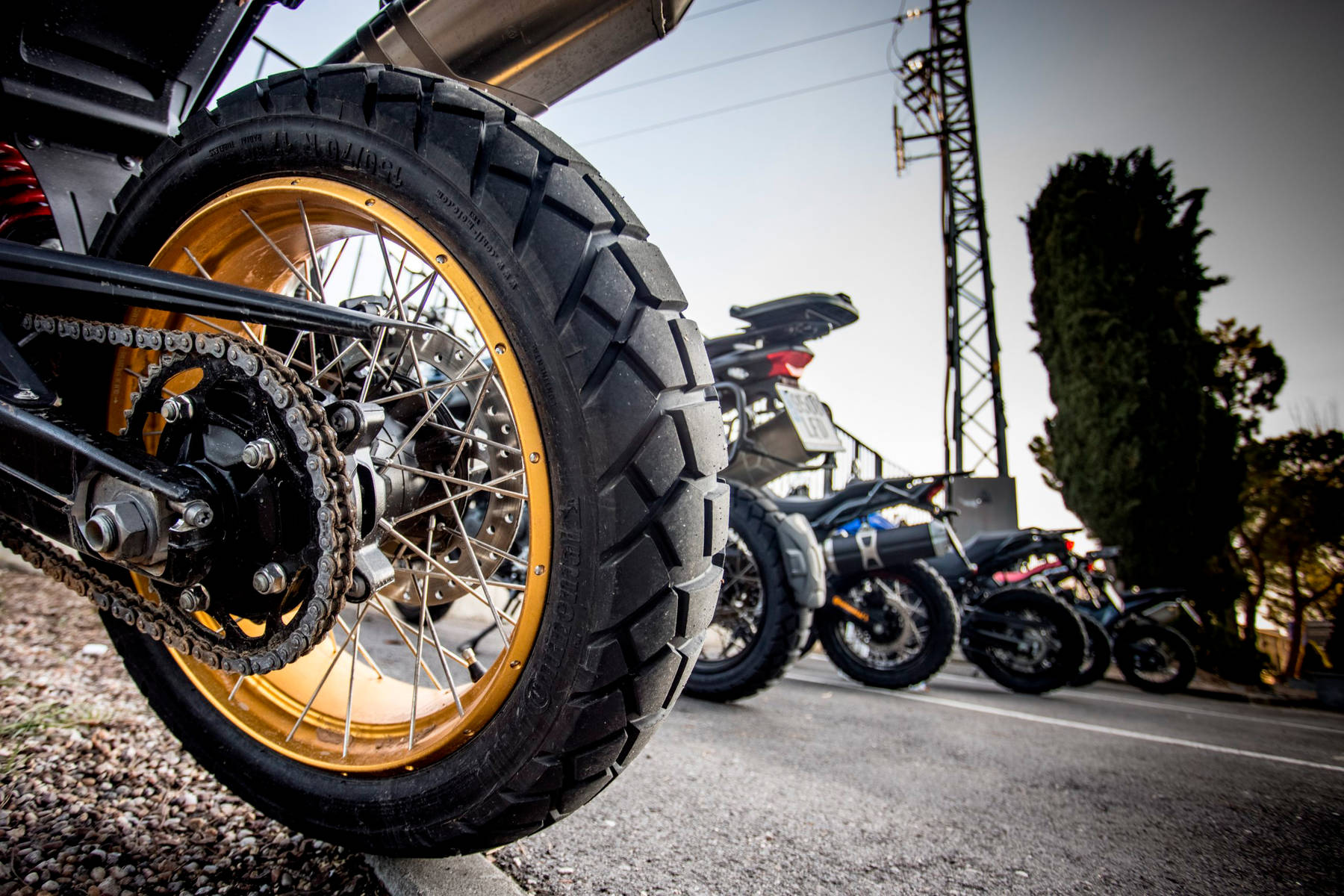 Tire temperature has a big impact on how a motorcycle behaves. It affects grip, stability, and rider confidence. But understanding how it works helps shift the focus to what actually matters.
Modern tires are designed to deliver reliable performance from the very beginning and adapt to real-world road use. Rather than worrying about “warming them up,” the key is to maintain correct pressure, ride smoothly in the first few minutes, and stay aware of conditions. Do that, and the tires will take care of the rest.
Related

Related