


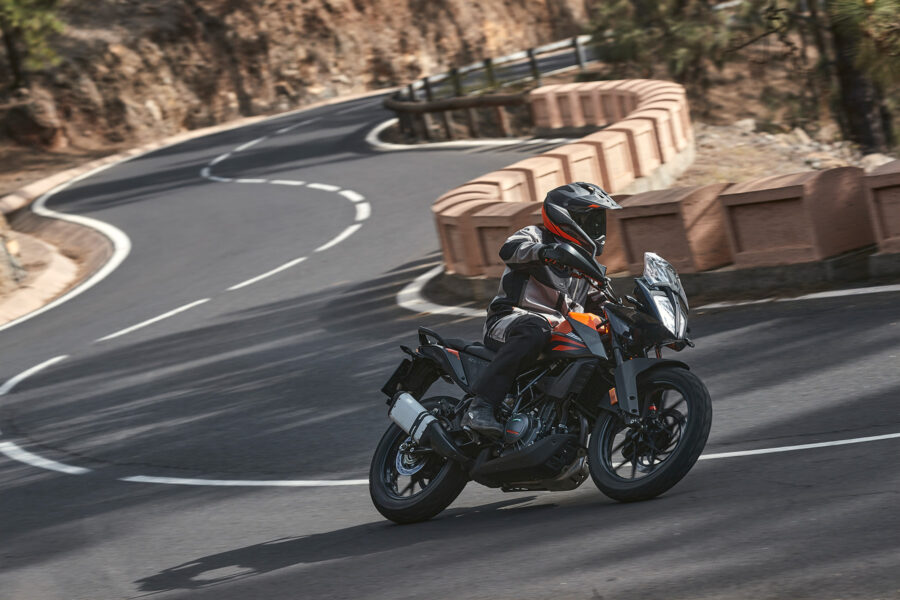
Responsible motorcycle riding
When you get on a motorcycle, you have to be aware of the awesome responsibility not only for your own safety but also for the safety of other drivers and riders. For this reason, it is important to take into account a series of considerations and advice before riding. For the safety of everyone, it is your responsibility to have an intimate feel and understanding of your equipment, riding technique, the condition of your motorcycle, and the traffic flow itself.
Here are Continental’s top tips to follow to get the most from your motorcycling experience.
1. Rider’s equipment


2. Riding with your eyes

Also keep in mind that mirrors are not for show, so it is important to glance left and right with a high frequency, for example, every 5-10 seconds in the city and every 15-20 seconds on the highway. With this routine, you will be able to keep a close eye on almost everything that is happening around you which helps when anticipating possible risks. Additionally, when performing any movement (changes of direction or lane), don’t forget your blind spots which are outside the angle of vision of your rearview mirror. Every so often, take a side glance to make sure that there is no vehicle passing.
Related


3. Anticipation
Some people so at attitude is more important than technique when riding. Think about the possible movements of other vehicles, no matter how crazy or incorrect they may seem, and leave enough space to be able to react to them in time.
4. Safety distances

In this section, we are going to discuss overtaking and how to assess the safety circumstances with respect to the vehicle you are overtaking and the necessary distance to complete the overtaking maneuver without compromising other users. In addition, you must remember that you can no longer exceed the maximum speed in overtaking, so the maneuver has to be done in more time and space.
5. Motorcycle check-up

It is also a good habit to check the lighting (position lights, dipped, full beam, turn signals and license plate), the condition of the mirrors, the brakes (fluid, cables, discs or drums), the levels of oil and other fluids, the transmission (chain, cardan and belt) and the engine (fluid leaks, noises and air, oil and gasoline filters).
Related

6. Zero alcohol, zero drugs

7. Caution in urban environments and on short journeys
Riders tend to lower their guard in urban environments and on short journeys. This lack of concentration and focus is one of the biggest mistakes you can make. Data shows that most accidents occur within a short distance of your home, so always keep your guard up when riding. It doesn’t matter if the journey is a few clicks or cross-country. The more focused you are on the road ahead, the safer it will be for everyone you come across.
8. More care in adverse conditions
When driving conditions are less than optimal, you have to be extra careful and attentive. In situations of rain, snow, night or low visibility, it is not only necessary to exercise extreme caution but also to take certain measures such as reducing speed, increasing safety distances, resting more often and changing your riding style. For example, avoiding stepping on the paint in wet conditions, driving in longer gears and braking and accelerating more gently to avoid loss of grip, or adjusting speed to visibility in foggy conditions.
Related

9. What to do in case of a fall

10. What to do in case you witness an accident
In the event you witness an accident, you should offer assistance and call for help. First, make sure you are safe; and make sure victims of the accident are safe. Then, call 911 so that medical professionals can arrive as soon as possible. Finally, offer additional assistance as is appropriate based on your training or the circumstances. Try not to move the injured unless there is no other choice. Remember you can worsen a situation or exacerbate injuries if you move a seriously injured person.
FINAL THOUGHTS
Next time you’re thinking about taking your bike out for a ride, just remember what Benjamin Franklin once said. “Tis easier to prevent bad habits than to break them.” The more you practice good habits, the more they will become a part of your everyday routines. Good habits can be made with practice. And by practicing these habits, you will be well on your way to a safer riding experience.
Can you think of more good tiding habits? Share them with us!