


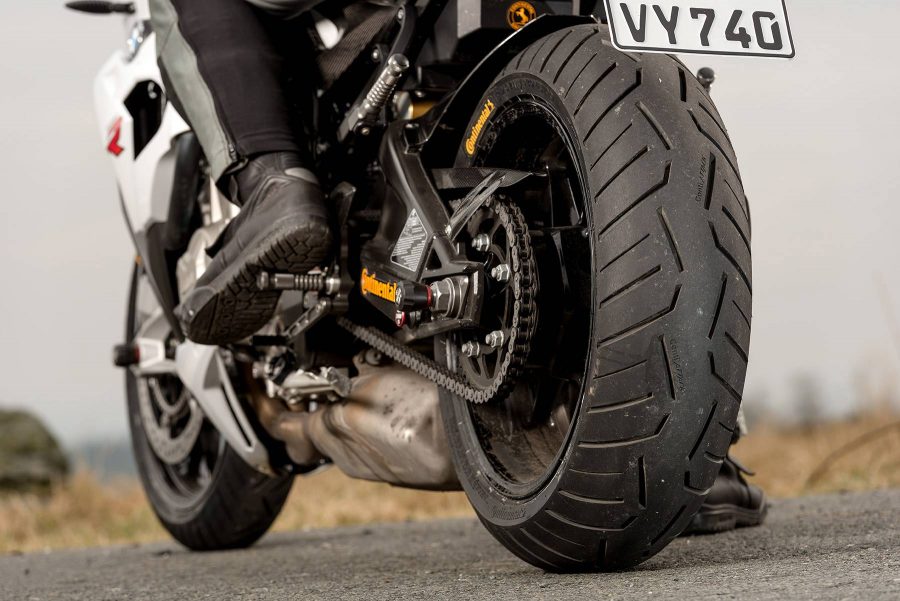
Why are we asking this question? Because it’s a question that you’ve already asked us. So, let’s evaluate the pros and cons of inflating your tires with regular air versus nitrogen.
The air we breathe in the atmosphere is composed of 78% nitrogen, 21% oxygen, and 1% other gasses plus water in different proportions depending on where it’s located.


You’ve probably heard recently about the use of nitrogen, but did you know that it has been used in the industry for a long time and has been a fundamental element of many products and services?
How’s it produced? Nitrogen is obtained by distilling the atmospheric air, which is collected into containers called washing towers where it is submitted to high pressure and cooling, producing liquid air. Next, after a boiling process, the oxygen and nitrogen separate due to different boiling points for each gas. Nitrogen evaporates first leaving oxygen at the bottom as a residue.


Formula One (F1) and the aeronautic industry have propelled and promoted the use of nitrogen for mainstream vehicles. For that reason, nitrogen generators have been developed for use in motorcycle repair shops.
Advantages of inflating your tires with nitrogen:
- Longer tire life. Tire wear is one of the biggest problems usually from riding at low pressure due mainly to a lack of attention to tire pressure and vehicle maintenance.

- Because nitrogen is a dry gas and doesn’t contain humidity, it extends the life of the tire while preventing internal rust.
- Due to constant and stable pressure and temperature, the tire’s performance is improved.
- Increases fuel economy and thus, reduces CO2 emissions.
- Nitrogen is a good ally for demanding road and track riders because it gives better performance. In some motorcycle repair shops, it’s included for free with tire installation.

Disadvantages of inflating tires with nitrogen:

- Inflating a tire with nitrogen is usually not free. The average cost per tire is from $2 to $6.
- When using nitrogen, it’s not necessary to check the tires’ pressure as frequently as when using regular air. But, when necessary, only a repair shop with a nitrogen source will be able to adjust the pressure.
- For regular riders, nitrogen has no real advantages.
- If you regularly check your tire pressure, inflating them with regular air is good enough and inexpensive!

In conclusion, we wanted to remind you that there is more than one option for filling up your tires. We wanted to share with you the possibilities, advantages, and disadvantages of using nitrogen as an alternative to regular air.
Until next time!!