



Reusing motorcycle tires: The dilemma

Apart from reaching the TWI, there are other points to keep in mind. To use a used tire as safely as possible, you also need to look for consistent tread wear all around, deformations, cracks, flat spots, nails and if the tire has been kept under proper temperature and humidity conditions. Storage time also plays a part, since a properly stored tire can be used up to only five years.
Tire life can be measured by the mileage, or in competition tires, by laps. Tire wear will mainly depend on the driving style and treatment of the rider. It’s important to differentiate competition tires from street tires when considering used tires as both serve different purposes.
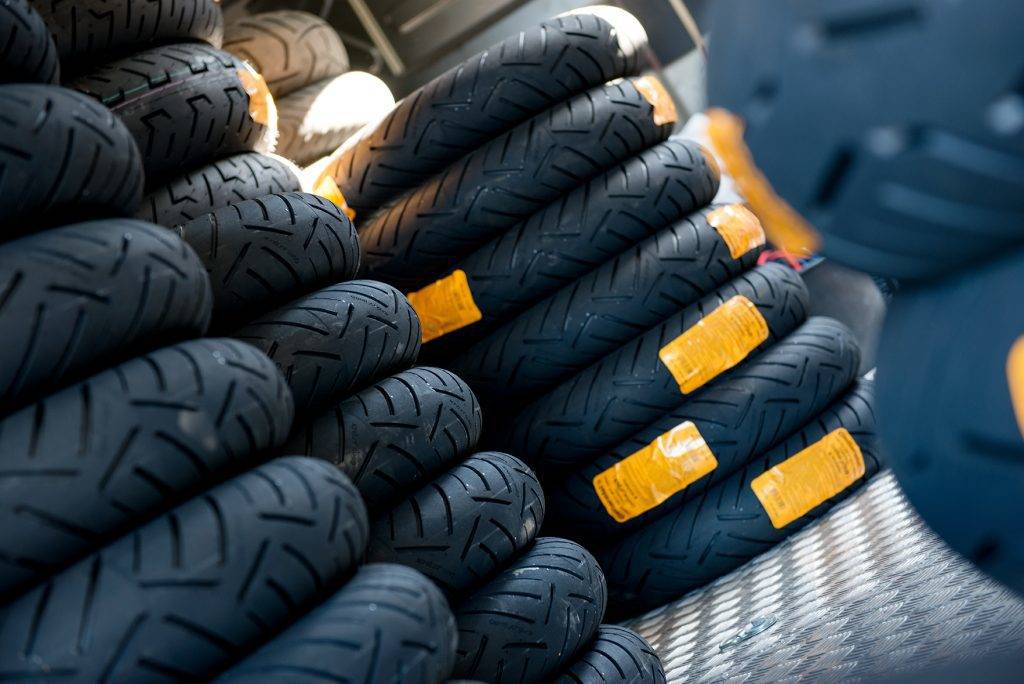

Track tires
Reusing tires is very common on track or competition tires, since their tire life is very short when compared to street tires. Therefore, it is popular to use them various times to keep costs down. Normally, there is high wear control and observation that goes into competition tires. This meticulous observation is something any professional or amateur team should pay close attention to. There are tires that are used only for exhibitions and others purely for racing. For racing tires, it will depend on the compound and laps completed to be considered for reuse. This way, when the motorcycle goes on track, the team should record temperatures of the asphalt and compound, record its pressure, and at the end of the session count the laps completed. This information is often marked on the tire’s sidewall and the tire is stored for further use.
Street Tires

Something to keep in mind is the importance of water drainage and how essential it is when considering used tires. A slick track tire is never used on the rain and therefore it can always remain a slick. Unlike a track tire, a street tire must have grooves to evacuate water under wet conditions. The groove’s drainage functions can be heavily affected by the wear and treatment given to a used tire.
Fitting used tires on your bike is not the best idea and is not recommended by Continental. It is hard to know the treatment given and the storage conditions of a used tire. However, it is understandable if in certain situations availability and money are a factor. Although new tires are more expensive, safety and peace of mind is something worth spending that extra money.
Until next week!