


How to Fix a Flat Tire Step by Step
In our blog we have given you all the tips and tricks to keep your motorcycle tires in good condition. It is essential to be attentive to their behavior, observe that the shape and tread are not altered, monitor the pressures continuously and a long etcetera that we have been telling you through the tips in this blog. However, there are always external factors that we cannot control and that can give us a surprise when we are on the road. That is why today we want to tell you what to do in case of a flat tire.
If you keep your tires in good condition, we can say that suffering a flat tire is simply bad luck. It is not something that happens frequently, but it is not impossible either. That’s why we have to be prepared for these situations. These are the steps to follow in case it happens to you.
1. Keep Calm

When you notice the symptoms of a flat tire, don’t make any sudden movements or slam on the brakes, grip the handlebars firmly and slow down gradually by braking with the wheel that is in good condition. Despite the agitation you may feel at the moment, do not forget to look (much more than usual) at your rearview mirrors, to make sure that other vehicles have noticed your problem.
2. Stand Back and Signal
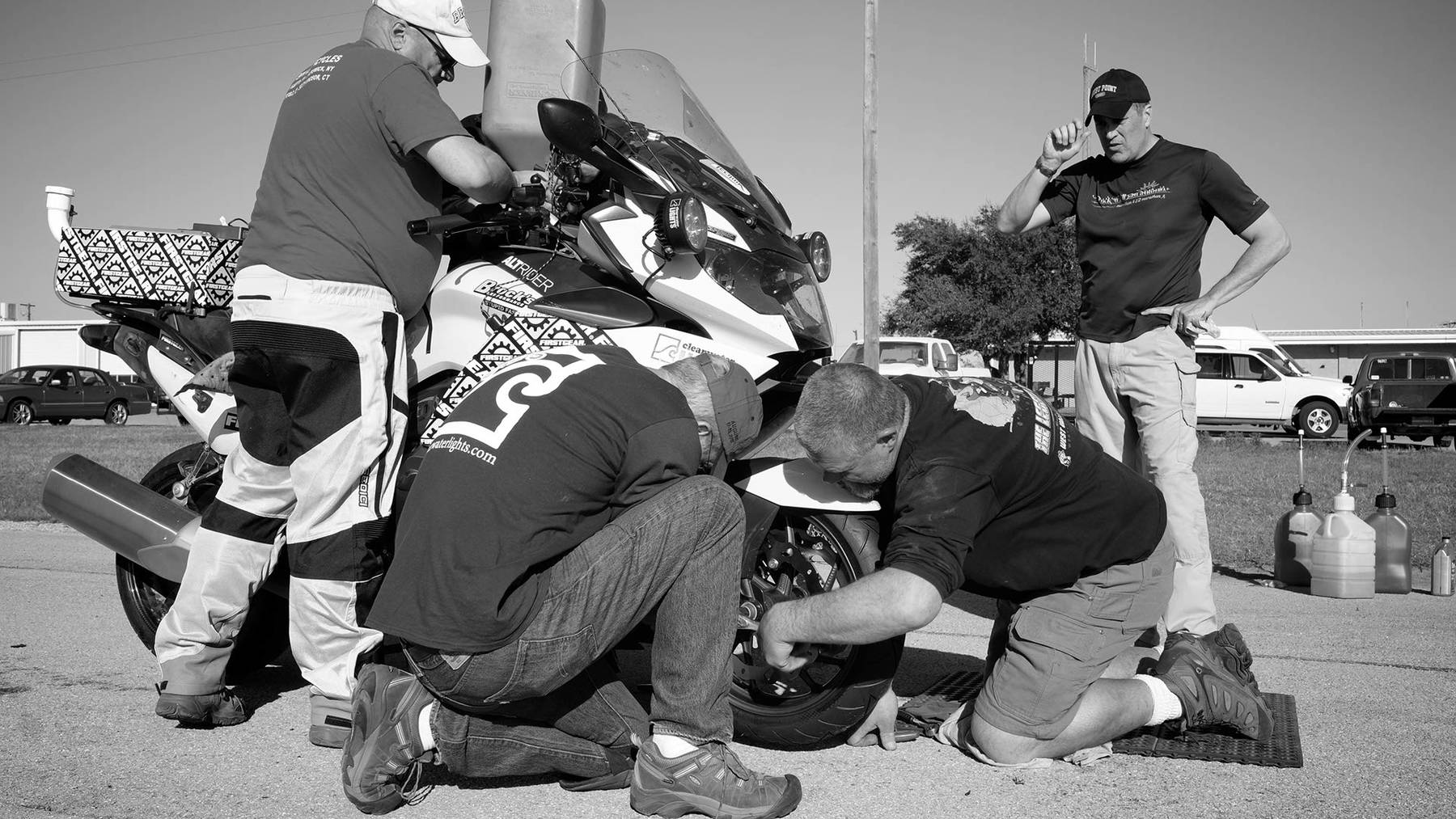
In case you do not feel safe to reach a service road, try to find a wide shoulder. The first thing you should do when you get off the motorcycle – trying not to encroach on the road – is to put on your reflective vest, if you have one. This element is not mandatory on motorcycles, although it is recommended. Another option is to have your motorcycle jacket with reflective elements. On motorcycles we do not normally carry triangles, so reflective clothing is the only way to alert other drivers of our presence.
3. Now What Do I Do?

Although we cannot carry a spare tire, we can be proactive and always carry with us (in case you carry a trunk or under the seat if you have a scooter) some products that can help us: tire flat repair kit or a foam spray tire.

As for the tire flat repair kit, they usually consist of pliers (to remove the punctured object), glue, punch, needle with punch, blade, rubber strips, compressed gas bottle and air bottle adapter and case. In this case we are given the tools to remove the nail or nailed screw and fill the hole with a piece of elastic material and flexible glue. The anti-puncture kits also have instructions to make it easier for you to follow the steps correctly.
If you do not have either of these two options, or you have tried to fix it and the tire is still losing air, it is imperative to call the tow truck and emergency services so that they can secure the area and avoid any danger on the shoulder.
4. Back On the Road With Care
If you have managed to repair your flat tire, it’s time to get back on the road. Collect everything you have used so as not to leave any debris on the road and return at a slower speed. Here we must resort to common sense, circulating at a more prudent speed than usual, but without hindering traffic or putting us in danger.
Once again, this is only a provisional solution in order to be able to reach our workshop and carry out the pertinent tire change.
5. Continental 3 Year Free Flat Towing

Continental provides its customers with a flat tire tow for 3 years up to 150 miles free of charge, the program also includes a 24/7 live agent service. This program is free of charge and is included with the purchase of any Continental motorcycle tire.
To take advantage of this benefit, simply have your purchase receipt along with your vehicle information number (VIN) and register your tires at www.totalconfidence-plan.com or by calling 888-990-6125 within 45 days from the date of purchase. You will then receive a Flat Tire Roadside Assistance Card along with program terms and conditions.
Continental’s own head of sales for Americas had this problem on one of his trips and tells us about his experience with the Free Continental Flat Tire Roadside Assistance program.

Related